What Is a Melamine Door? Finish, Construction and Care
A melamine door is a door finished with a melamine-based decorative surface. The term describes the facing, not the entire door construction. The same type of finish can be used with different cores, so a woodgrain surface alone does not tell you what is inside the door or how the complete assembly performs.
What does the melamine surface contain?
Melamine-faced decorative boards use decorative paper impregnated with melamine resin as a surface layer. The paper provides the colour or printed pattern, including woodgrain effects. The supporting board and the way that board is incorporated into a door are separate parts of the construction.
Product terminology varies, so do not assume every surface called laminate has an identical structure. Ask whether the proposed facing is a melamine-faced board, a separate laminate or another surface system when comparing products.
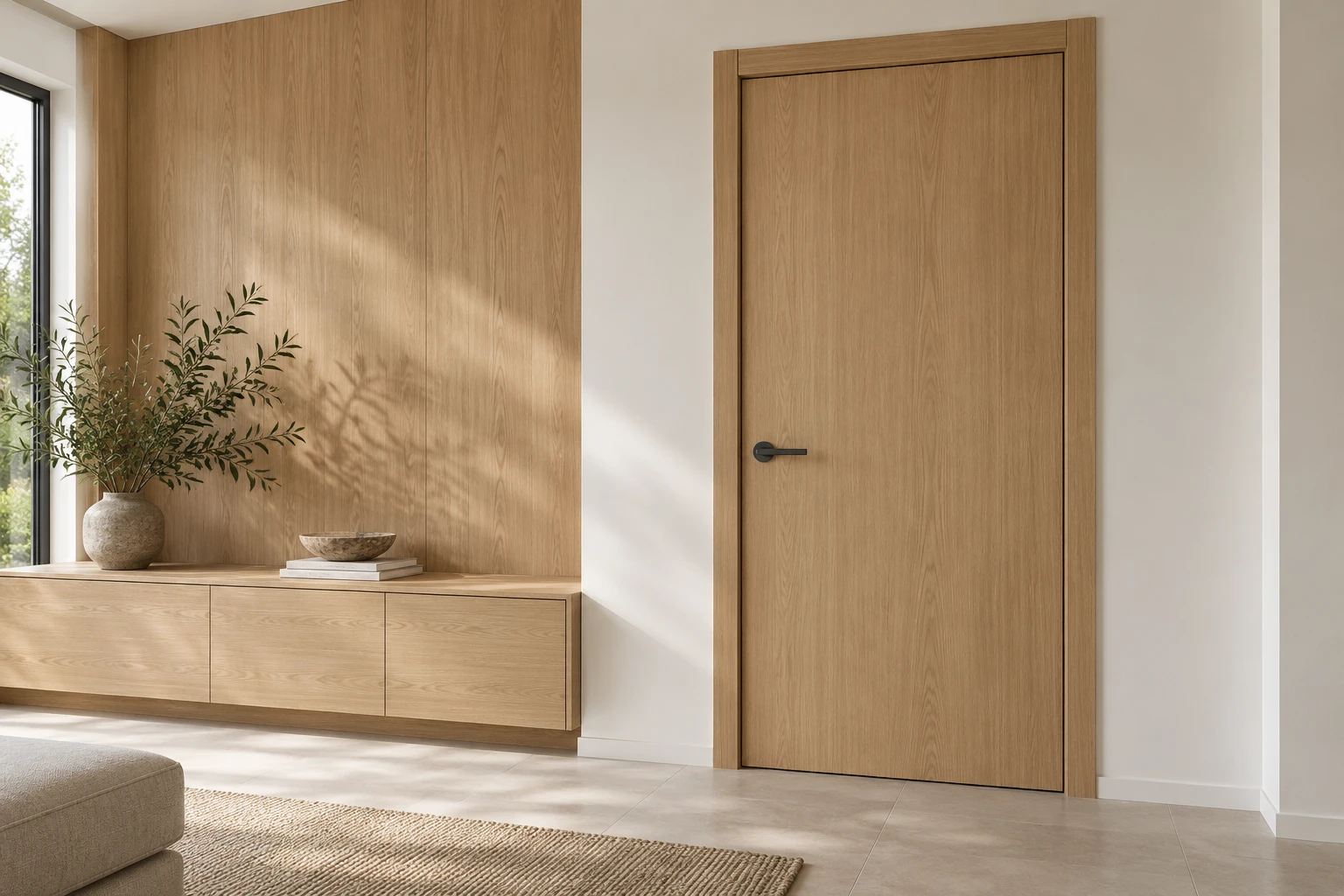
Is a woodgrain melamine door solid wood?
No. A printed woodgrain surface is not evidence of a solid-wood leaf or a natural wood veneer. A veneer uses a layer of real wood; a decorative paper facing uses a printed design. Both can create a wood appearance, but they are different materials.
A melamine-faced door may still contain wood-based materials internally. The useful distinction is between the surface and the core, rather than a simple claim that a door is either wood or not wood.
How does it compare with a painted finish?
A melamine decorative facing provides a selected colour or pattern as part of the surface material. A painted finish obtains its appearance from a coating system. Consider which offers the appearance you want, how the door will be supplied and what care or repair method applies.
Do not assume a melamine finish can be repainted or repaired in the same way as a painted door. Adhesion and repair options depend on the actual surface. Ask for the appropriate method before sanding, coating or treating a damaged area.
Is it suitable for bathrooms?
The surface name alone does not establish bathroom suitability. The underlying materials, exposed edges, seals, installation and expected humidity all matter. An easy-to-clean face does not make a complete door waterproof.
Distinguish a ventilated bathroom opening from a location regularly exposed to direct splashing. Use the manufacturer's stated application limits and keep water from collecting at the door edges or bottom. Do not substitute a general material description for a product-specific moisture specification.
How should you clean it?
Follow the care instructions supplied for the door. Start with a soft cloth and a mild method suitable for the specified finish. Avoid abrasive tools, and do not experiment with strong solvents on a visible surface. Remove residual moisture rather than leaving the leaf or edges wet.
EGGER's decorative-surface guidance describes melamine-resin surfaces as generally easy to clean, but its instructions apply to its own products. Use that as background information, not as a substitute for the cleaning instructions for your particular door.
What should you check before choosing?
Review a physical finish sample and the door construction separately. Check colour, texture and grain direction, then look at the edges and the relationship with the frame and casing. Screen photographs are useful for initial browsing but cannot establish the final colour match.
A melamine finish can be part of a coordinated interior, including doors and matching components. Its value lies in the selected appearance and surface specification. It does not automatically establish fire, acoustic, environmental or moisture performance; those questions require information about the complete product.